
Electrical Engineering Works
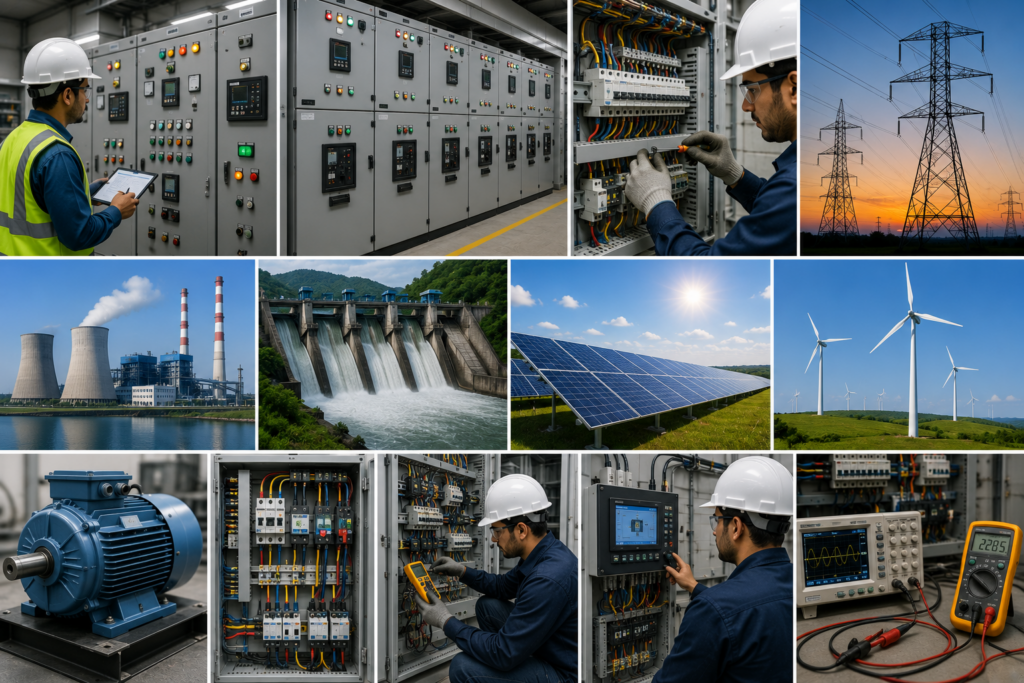
Electrical engineering involves the study, design, and application of systems that use electricity, electronics, and electromagnetism. Major areas include power systems, machines, electronics, control systems, and communication. Electrical engineering is a field that deals with the production, transmission, distribution, and utilization of electrical energy, along with the study of electrical machines, electronics, and control systems.
Power generation is a major part of electrical engineering, and electricity can be produced using thermal, hydro, solar, and wind power plants. In a thermal power plant, coal or gas is used to heat water, producing steam that rotates a turbine connected to an electrical generator. Hydroelectric power stations use the potential energy of stored water to drive turbines with very high efficiency. Solar power systems operate using photovoltaic cells that convert sunlight into direct current electricity, whereas wind power systems use wind turbines to produce electrical power depending on wind speed and blade design.
Electrical machines play an important role in converting electrical energy into mechanical energy and vice versa.
Our Expertise
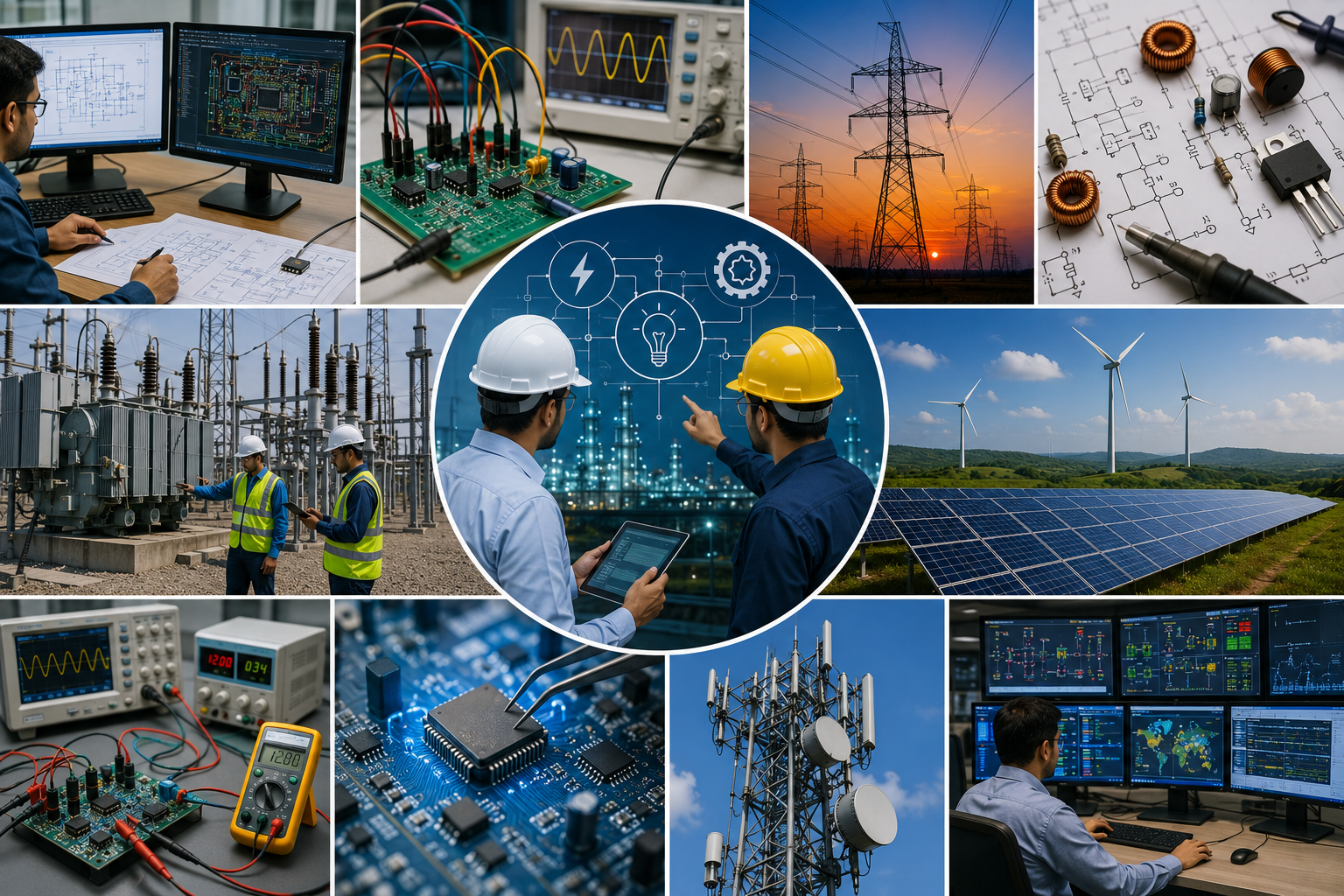
- Electrical engineering focuses on the study and application of electricity, electromagnetism, and electronics.
- It involves understanding how electric charge flows through conductors, circuits, and devices.
- Circuit theory forms the foundation, involving resistors, capacitors, inductors, diodes, and transistors.
- Expertise includes designing circuits for power, control, signal processing, and communication.
- Power engineering covers generation, transmission, and distribution of electrical energy.
- Engineers work with transformers, generators, switchgear, substations, and high-voltage networks.
- Renewable energy systems—solar, wind, hydro, and smart grids—are major applications.
- Electronics engineering deals with microprocessors, embedded systems, sensors, and integrated circuits.
- Communication engineering includes wireless networks, antenna design, modulation techniques, and signal processing.
Our Electrical Process
- We follow a structured and quality-driven execution process to ensure efficient, safe, and sustainable project outcomes.
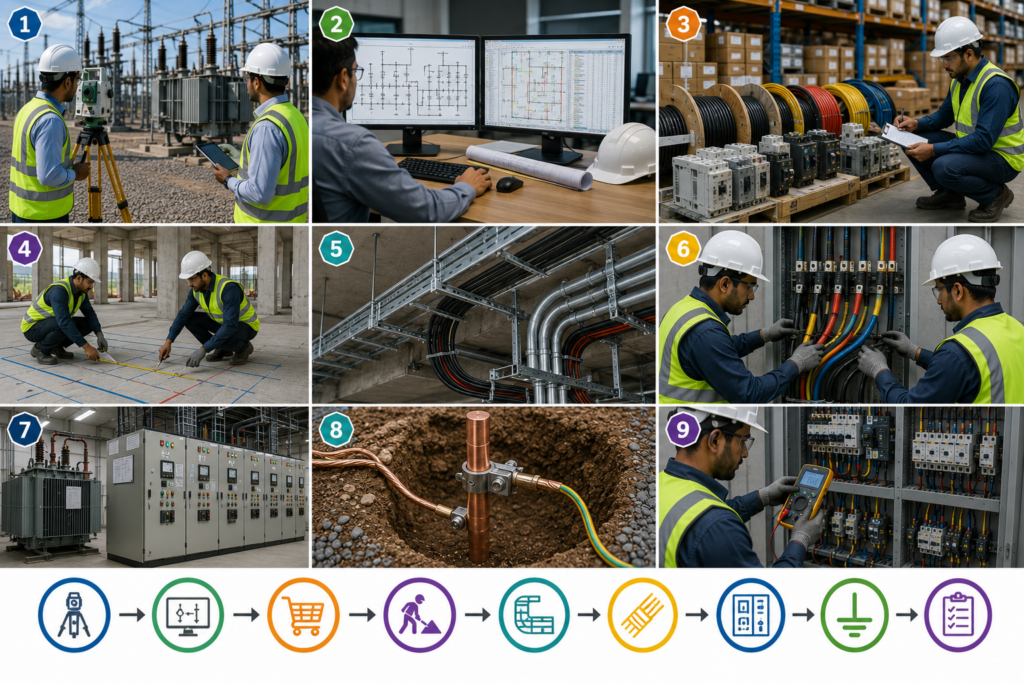
- Please find the Step-by-Step Workflow as follows:
- Kickoff & Site Survey
- Start project, inspect site, verify power sources and constraints.
- Design & Approvals
- Prepare load calculations, SLD, layouts, and get consultant/client approval.
- Procurement
- Order and inspect electrical materials and equipment.
- Pre-installation Prep
- Mark routes, coordinate with civil/MEP, and set up supports.
- Conduits & Cable Trays
- Install trays, conduits and trunking along approved routes.
- Cable Laying & Termination
- Pull cables, terminate, label, and dress them.
- Install Panels & Equipment
- Fix transformers, DG, UPS, switchgear, DBs, control panels.
- Earthing & Lightning Protection
Quality Assurance & Safety
- Ensures all electrical work meets required codes, standards, and specifications.
- Involves inspecting materials, using proper installation methods, and verifying system performance.
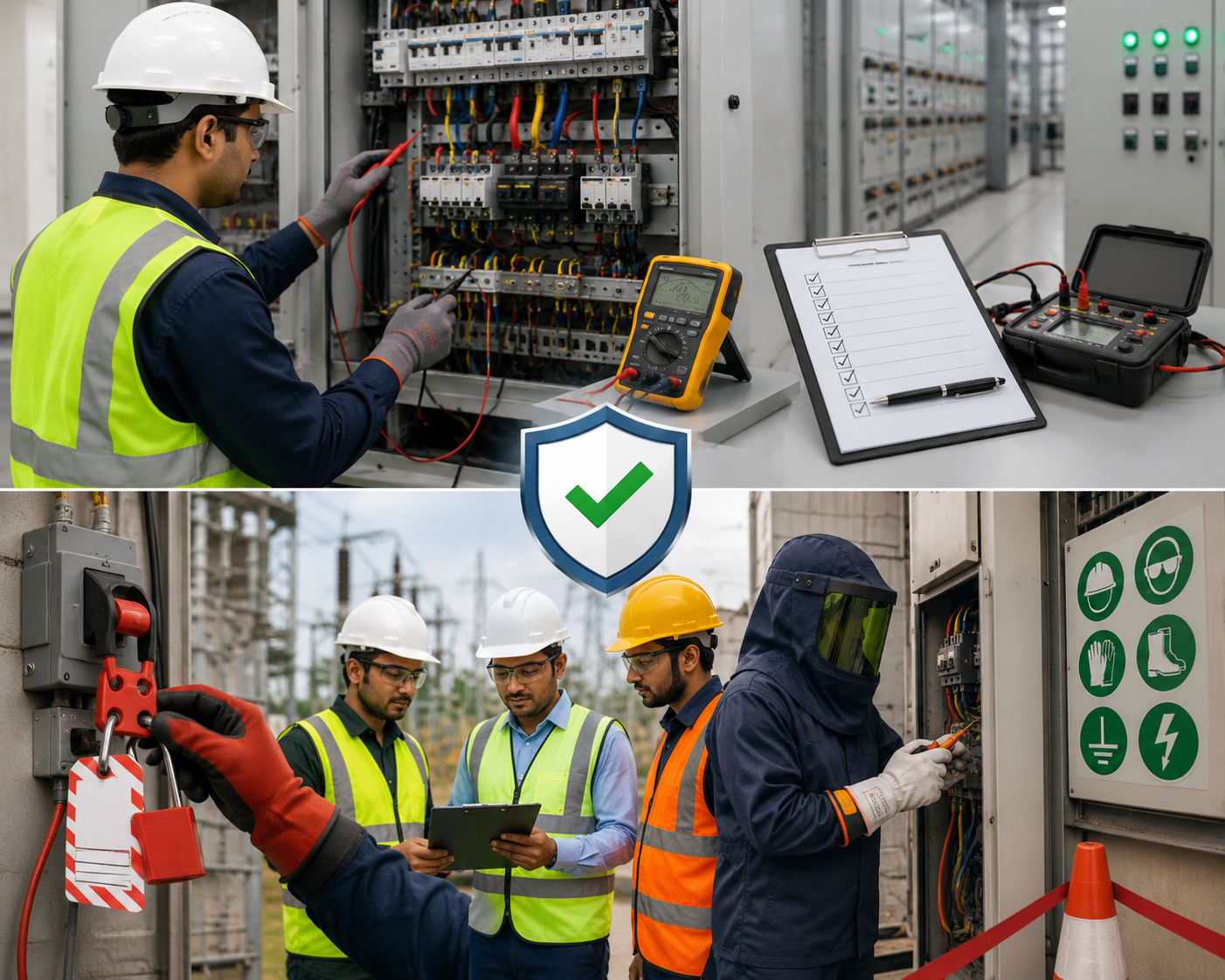
- Uses testing procedures such as insulation resistance tests, continuity tests, and load tests.
- Maintains documentation, checklists, and compliance records for each project stage.
- Focuses on delivering reliable, efficient, and defect-free electrical systems.
Safety
- Ensures the protection of workers, equipment, and the public during electrical work.
- Includes risk assessment, lockout–tagout (LOTO), grounding practices, and safe work procedures.
- Mandates the use of PPE: gloves, safety shoes, helmets, and arc-flash suits, where needed.
- Requires following the IEC, IS standards, and site safety codes.
- Emphasizes safe handling of live systems, proper earthing, and preventing electrical fires or shocks.
Quality and safety are at the heart of every project executed by Space Engi Tech and Works Pvt. Ltd.
Project Highlights
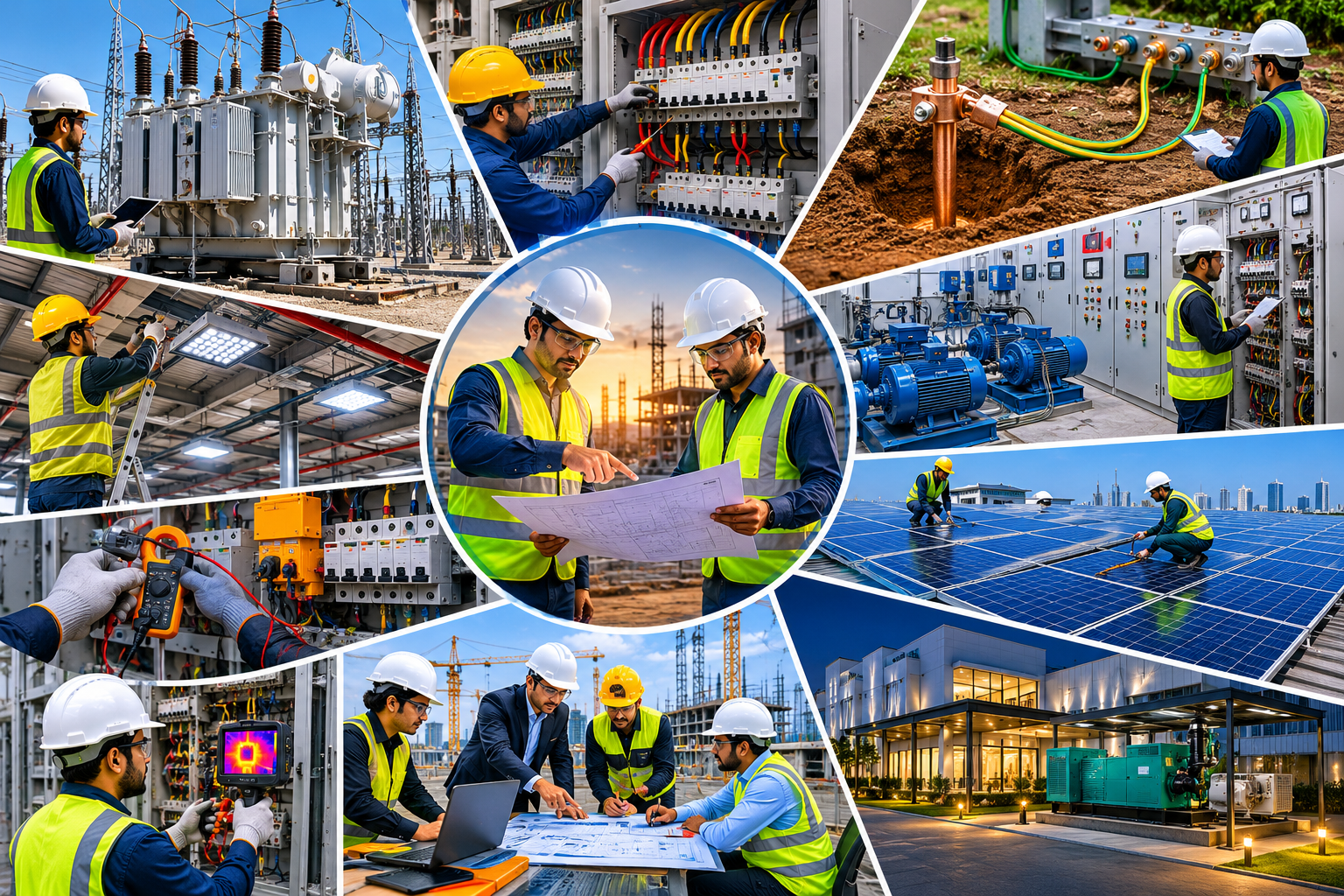
• Power & Distribution Efficient design and installation of transformers, panels, and electrical networks.
• Safety & Compliance
Earthing, grounding, and adherence to all relevant electrical standards.
• Building Electrical Systems
Wiring, lighting, switchgear installation, and backup power solutions.
• Industrial Installations
MCC/PCC panels, motors, and automation system integration.
• Testing & Quality Assurance
Electrical testing, validation, and commissioning documentation.
• Renewable & Smart Solutions
Solar PV setups, smart metering, and energy-efficient systems.
• Project Execution & Management
Planning, supervision, coordination, and as-built documentation.
Industries We Serve
Electrical engineering expertise supports a wide range of sectors, delivering safe and reliable power systems across:
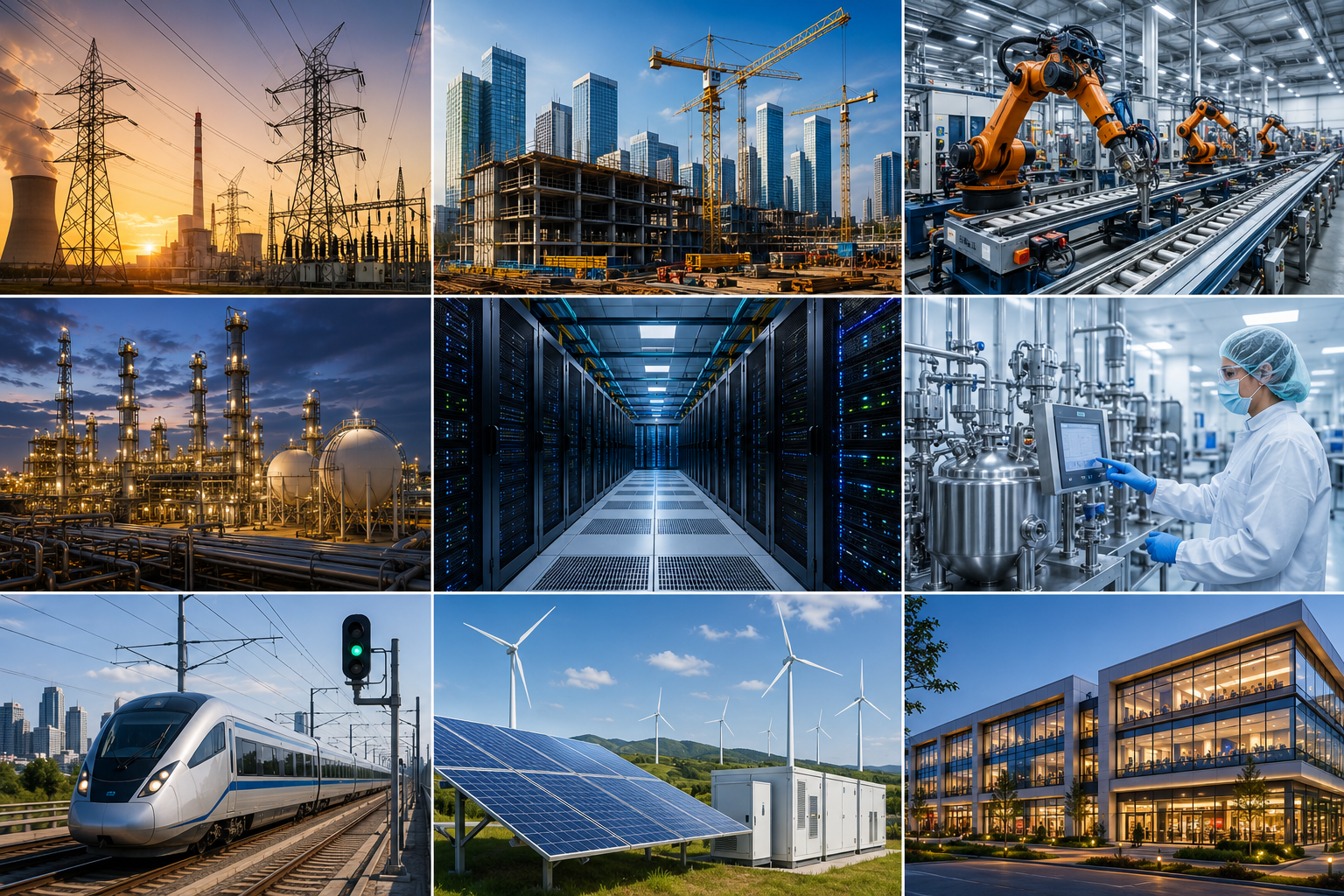
• Power & Utilities
Generation, transmission, and distribution systems.
• Infrastructure & Construction
Building electrification, lighting, and safety systems.
• Industrial & Manufacturing
Automation, control panels, and process power solutions.
• Oil, Gas & Petrochemical
Hazardous-area electrical systems and safety compliance.
• Data Centers & IT Facilities
High-reliability power, UPS, and redundant systems.
• Healthcare & Pharma
Cleanroom power, emergency systems, and equipment support.
• Transportation & Railways
Rail electrification, signaling, and EV charging.
• Renewable Energy
Solar, wind, and hybrid energy systems.
• Commercial & Retail
MEP services, energy-efficient lighting, and power distribution.
